












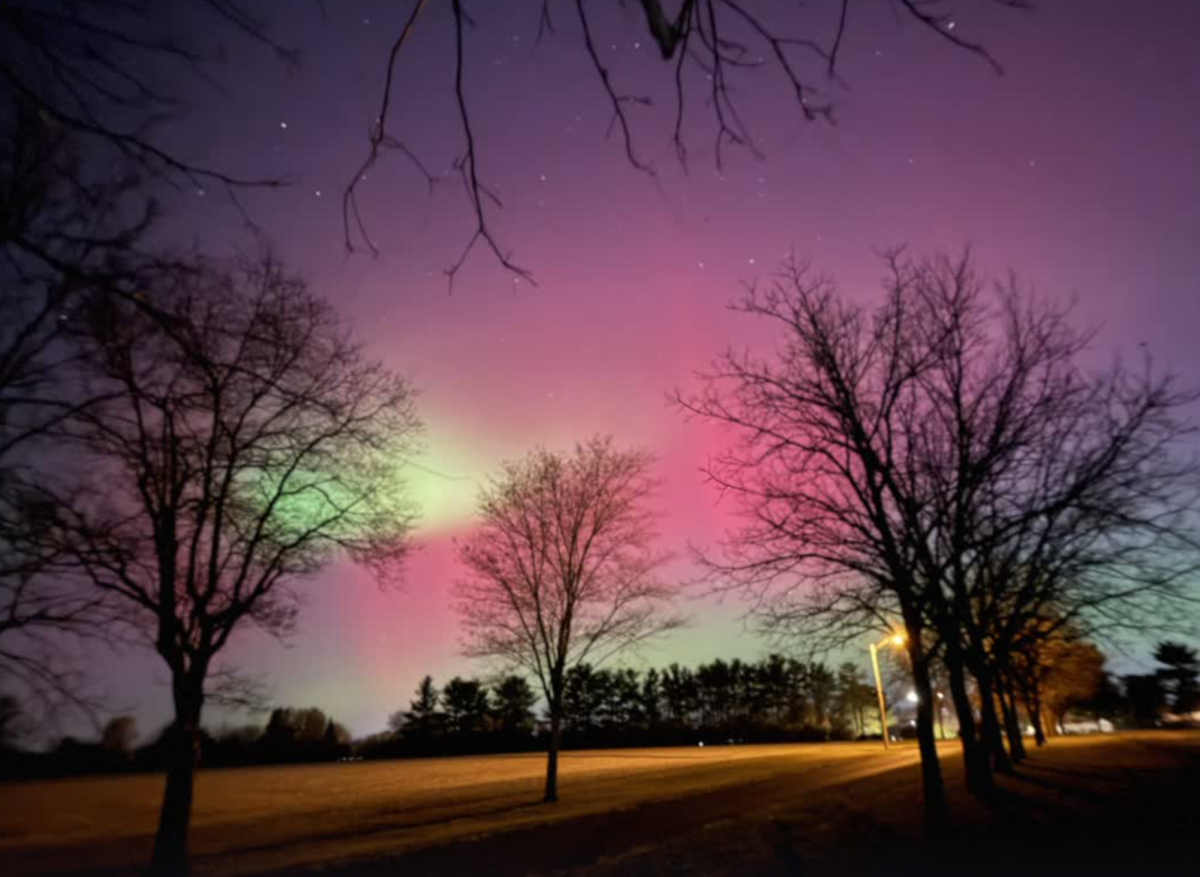





















The Northern Lights, or Aurora Borealis, are a natural light display that uses the night sky as its stage. Caused by charged particles from the sun colliding with gases in the upper atmosphere, this interaction leaves behind vibrant colors that swirl and dance in the night sky. This spectacle’s different colors come from types of gases high in the atmosphere and how high up the particles collide. Green, the most common color seen, is produced when charged particles interact with oxygen around 60 to 159 miles above Earth. Going higher up in the sky can produce a red color, and if it combines with nitrogen, the colors created are purple and pink. On November 11th and 12th, these colors were able to be seen lighting up the sky in Peoria, IL. This powerful geomagnetic storm, caused by solar activity during the sun’s 11-year cycle, was pushed down further south than usual.
This sight, usually reserved for the far northern skies, held a glow that was visible to the naked eye across Illinois. For many residents, it was a once in a lifetime sight. Residents who were lucky enough to watch this beautiful scene shared videos and photos online, amazed to be able to see it from the comfort of their own backyards. The shared excitement created a sense of community even among strangers who were all looking up at the same rare sight.
In order to see the northern lights in Peoria at the best visibility, enthusiasts should be in a rural location with clear skies, away from streetlights. The display lasts for several hours, but the strongest view is only about 15-30 minutes. However, the phenomenon is not easily captured by smartphones or with the naked eye.
Scientists say we may see more of these northern lights in the coming months since the sun is in its active phase. When the sun is at the peak of its cycle (solar maximum), it leads to more sunspots and solar flares, causing more frequent and intense northern lights displays. So, the next time you hear about a solar storm, don’t forget to go outside and look up for a beautiful view of a lifetime.