













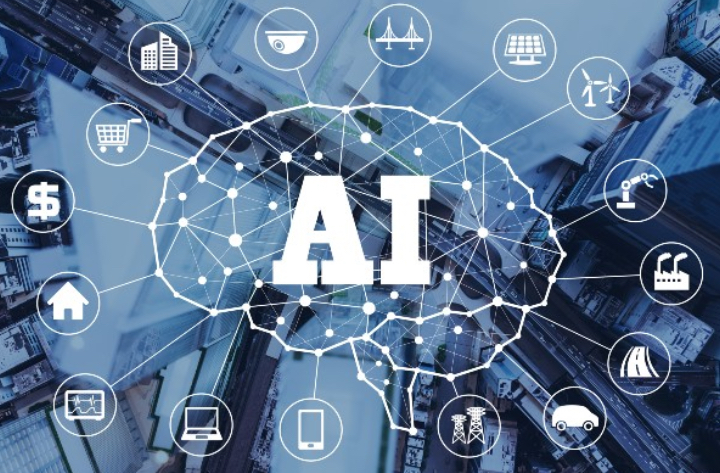



















In 1956, a researcher by the name of John McCarthy attended the Dartmouth Summer Research Project with a culturally esoteric term that would later go on to flip the technological world upside down. That term just so happened to be “Artificial Intelligence (AI),” which encompasses all programming in imitation of human thought and intellect. Artificial Intelligence is now employed most in situations where cognitive efficiency takes precedence, for while its original purpose may have revolved solely around assistance and secondary recreation, the latest versions of AI software deter that reasoning completely. And, although revolutionary algorithmic software such as ChatGPT and OpenAI had not yet been invented, John McCarthy had managed to accurately predict an immense future in store for the field of AI, earning him the honorary title “Father of Intelligence.”
John McCarthy believed firmly in the capacities of Artificial Intelligence long before any of his colleagues, and it is primarily due to his diligent work that later innovators were able to further advance the field. However, over time, public opinion regarding AI has evolved, and many have begun to grow skeptical about the ethical implications of unrestricted software. Similarly, generative AI has been used upon multiple occasions to scam, deceive, and take advantage of unsuspecting persons. And so, it is due to these reasons and many more that petitioners against Artificial Intelligence have grown in number, and that fact does not come without statistical support: according to a 2025 poll taken by the Pew Research Center, over 68% of Americans disapprove of AI, and 50%–or half—are “more concerned than excited about AI’s use in daily life.” However, statistics also illuminate that experts within their respective fields believe more strongly in the benefits of AI as opposed to regular citizens.
Specialized fields—such as healthcare, engineering, and accounting—are now experiencing an immense wave of AI consumption for tasks requiring data documentation and analysis. Jung Ho Choi, an Assistant Professor at the Stanford Graduate School of Business for accounting, states that, “In order to support each client, accountants have to pull information, connect bank transactions, track vendors — a lot of prework. AI assists with that setup, which means they can serve more clients, more efficiently.” Automated software, when used in assistance rather than by itself, can greatly improve the productivity of a business by enabling employees to concentrate their time towards meaningful work rather than tedious record-keeping.
The job placed in maintenance of this tedious record-keeping, however, has been occupied for several decades, and with the ever-increasing growth of Artificial Intelligence usage, it is believed that they—alongside many other workers—may soon find themselves replaced. More specifically, workers without an extensive educational background (bachelor’s degree and above) are expected to face rising rates of unemployment, and the primary concern brought about by this predicament is the socioeconomic class factor. Tuition costs are only continuing to grow, while income is not; so many must now choose between long-term student loan debt and the mere possibility of a future in this growingly scarce workforce.
John McCarthy envisioned AI with a great aspiration in mind: raising the degree to which thought can be accomplished, and in turn, changing the world. Although much time has passed since 1956, the advent of Artificial Intelligence, McCarthy’s original purpose remains significant, and when employed as a proper resource, AI could indeed change the world for the better.
Sources: https://www.teneo.ai/blog/homage-to-john-mccarthy-the-father-of-artificial-intelligence-ai
https://eng.vt.edu/magazine/stories/fall-2023/ai.html
https://www.gsb.stanford.edu/insights/ai-reshaping-accounting-jobs-doing-boring-stuff