













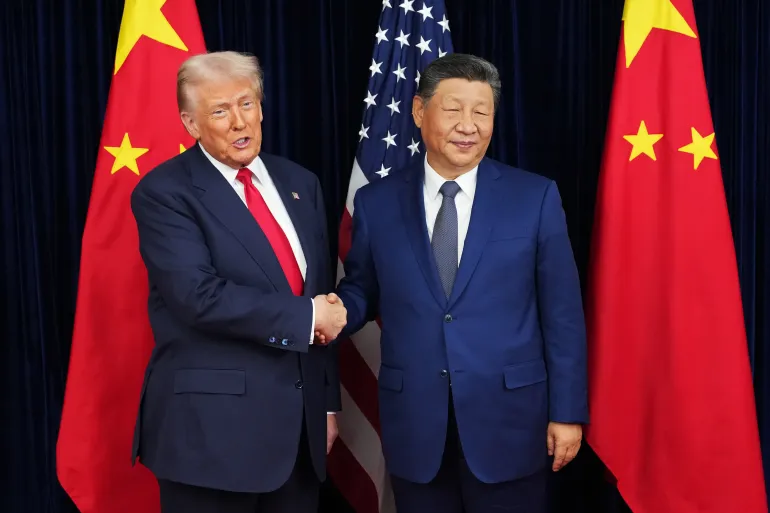




















Recent events between the Chinese and American governments have led to rising tensions around the world. Some leading factors of the escalation are massive new tariffs, tech sanctions, and geopolitical concerns. These factors have been affecting both economies and causing uncertainty in the world right now.
The U.S. economy has been very unstable for the past few years because of the COVID-19 epidemic, the military conflicts in Europe and the Middle East, and the transition from one president to another. The economy has been relatively strong lately but is very fragile and reactive to the actions of the president or other foreign representatives.
China has still been recovering from the supply chain disruptions caused by COVID-19 and has negatively impacted those who rely on those suppliers. Tariffs have been imposed by the U.S. on Chinese goods which has caused China to retaliate with higher tariffs of their own and increased costs on certain goods. This has led to a reduction in U.S. investment in China and a growing trade deficit.
The U.S.-China trade war has intensified recently because of tariffs being placed on China by President Trump. President Trump’s return to the White House has been a very controversial topic and is very influential in terms of the economy. In February, the U.S. imposed a 10% tariff on all Chinese imports, and it ended up escalating to 145% on a wide range of goods by May. China responded with tariffs of their own. However, in late May, there was a pause that allowed negotiations to start.
Looking to the future, both countries would like to come to an agreement that suits their wants and needs. As of now, no such agreement has been reached. However, there is a negotiation deadline on November 10th that can be extended if agreed upon by both countries. There are also Supreme Court hearings scheduled for early November concerning the legality of the tariffs that President Trump imposed.
Higher consumer prices, reduced trade activity, and an overall decline in GDP have caused our economy to suffer. Input costs also rose because many components of products are not locally produced and are bought from China instead. This caused trade diversion to occur, with a slight improvement in the trade balance. Most of the import demand shifted to other countries instead of bringing production fully back to the U.S. Due to this, the economy has lost many jobs and even some geographic loss such as farming communities.
In conclusion, the U.S-China trade war has caused substantial economic costs to the United States, outweighing the intended benefits from the relationship. The tariffs increased prices for consumers and producers, disrupted many supply chains, and harmed key industries such as agriculture and manufacturing. While some sectors experience short term “protection,” in the end, the economy suffered from slowed growth, job loss, and increased inflation. The trade war has shown that isolating ourselves from global markets can have a downside and that it is important to be careful with who we do business with.